Floor Sweeper Buyer's Guide
Quick Answer
Pick a walk-behind sweeper for tight spaces and smaller areas on a budget, a rider sweeper for large areas and full shifts, and a sweeper-scrubber if you want to sweep and scrub in one pass. Choose battery power for indoor work and low running costs, or an engine (LP for indoor/outdoor use) to avoid charging downtime.
Shop Walk-Behind SweepersShop Rider Sweepers Not sure? Call 800-440-6723 or get a recommendation.
Reviewed by Grady Martin, General Manager, Southeastern Equipment & Supply · Updated October 2026
Why Sweep?
Sand, dirt and dust need constant attention, and sweeping removes debris from almost any surface. It matters because:
- A dirty floor is unattractive.
- A dirty floor can cause slips and falls.
- Dirt and debris wear floors out faster.
- Less dirt on the floor means less dust in the air.
Mechanical sweepers, from small walk-behinds to large riders, do this far faster than a broom.
How Floor Sweepers Work
Most sweepers combine a mechanical sweeper with a vacuum system. The main brush spins against the direction of travel and throws debris into a hopper. The vacuum pulls air over the brush, through the hopper and out, which helps control dust. The hopper usually sits at the rear with debris entering from the top, so it fills efficiently.
What to Consider
Location
Where will you dump the hopper? If the dump area is hard to reach, a larger hopper means fewer trips. Sweeping indoors? Look for strong dust control.
Cleaning Area Size
Too small costs you labor; too big won't fit tight spots. Some facilities run both a large rider and a small walk-behind.
Power System
Engine sweepers avoid charging downtime, and LP models work indoors or outdoors, but fuel and maintenance cost more. Battery sweepers are ideal indoors with much lower consumable costs, but need at least 8 hours to charge.
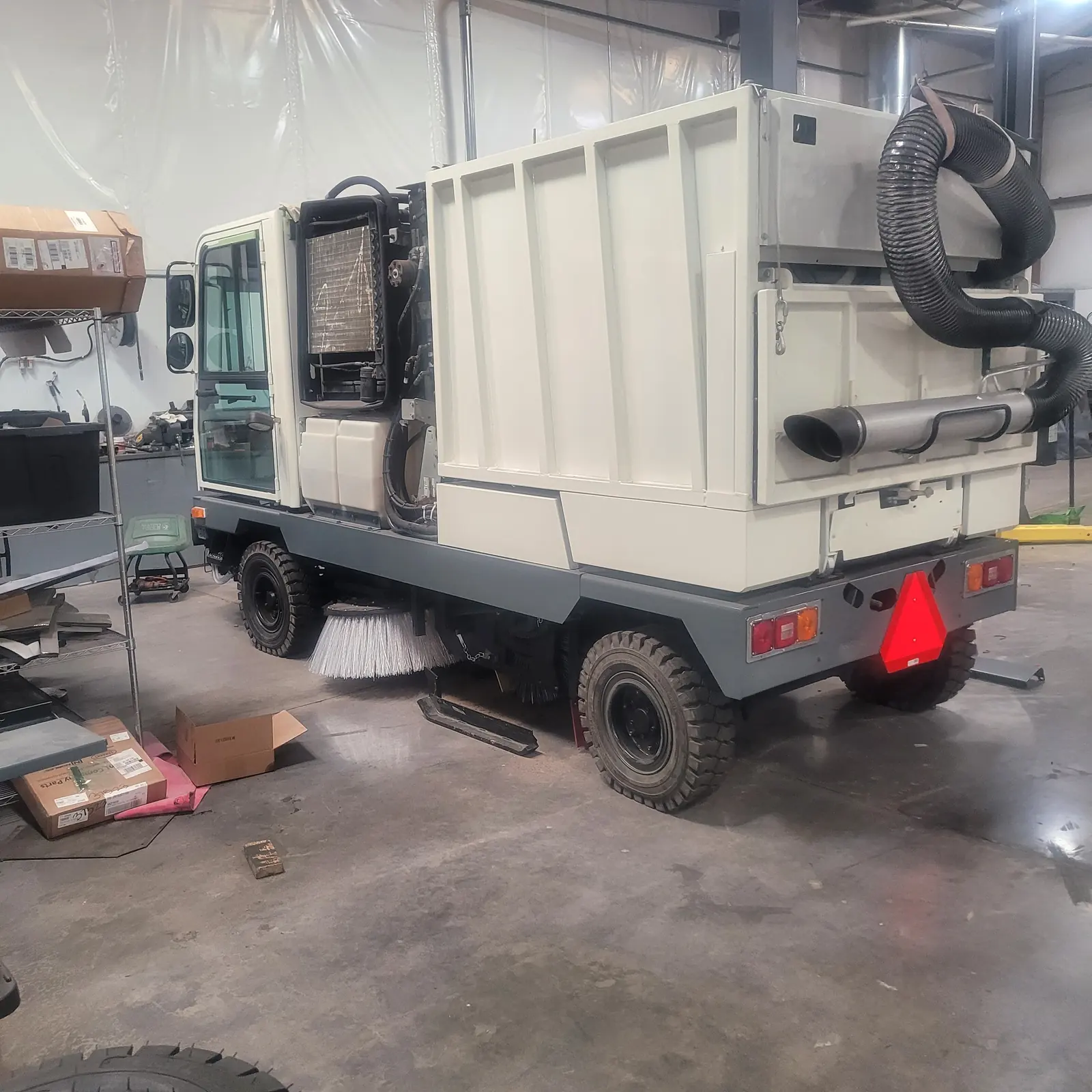
Types of Floor Sweepers
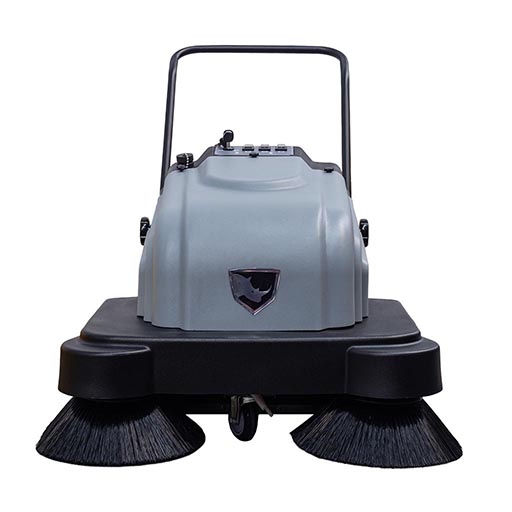
Walk-Behind Sweepers
Pros: easy to maneuver in tight spaces, cost less than riders, far more productive than a broom.
Cons: lower productivity than riders, manual hopper dumping can cause injuries, heavy dust hopper, operator fatigue.
Shop walk-behind sweepers →
Rider Sweepers
Pros: wide sweep paths and large hoppers for high productivity, operators can ride a full shift, often automatic hopper dumping.
Cons: cost more (often justified by productivity), can struggle in tight areas, need storage and charging space.
Shop rider sweepers →
Sweeper-Scrubbers
A complete sweeper up front and a complete scrubber at the rear, so you can sweep and scrub at the same time or use either system alone. They cost more, but the labor and time saved usually offsets it.
Shop sweeper-scrubbers →Save on any of these with an SES certified reconditioned or demo sweeper.
Floor Sweeper FAQ
Battery or engine sweeper?
Battery sweepers are ideal indoors and cost much less to run, but need at least 8 hours to charge. Engine sweepers avoid charging downtime; LP models can run indoors or outdoors but cost more in fuel and maintenance.
Walk-behind or rider sweeper?
Walk-behinds are better for tight spaces and smaller budgets. Riders are better for large areas, full shifts and automatic hopper dumping.
What is a sweeper-scrubber?
A rider machine with a full sweeping system in front and a full scrubbing system in back. It can sweep and scrub in one pass or use either system on its own.
Want a Recommendation?
Tell us your space and debris and we'll match the right sweeper.